Start with the roof
We review roof condition, pitch, geometry, shade, and obstructions before recommending Solar Roof. If a conventional roof and rack-mounted panels make more sense, that comparison should be clear from the start.
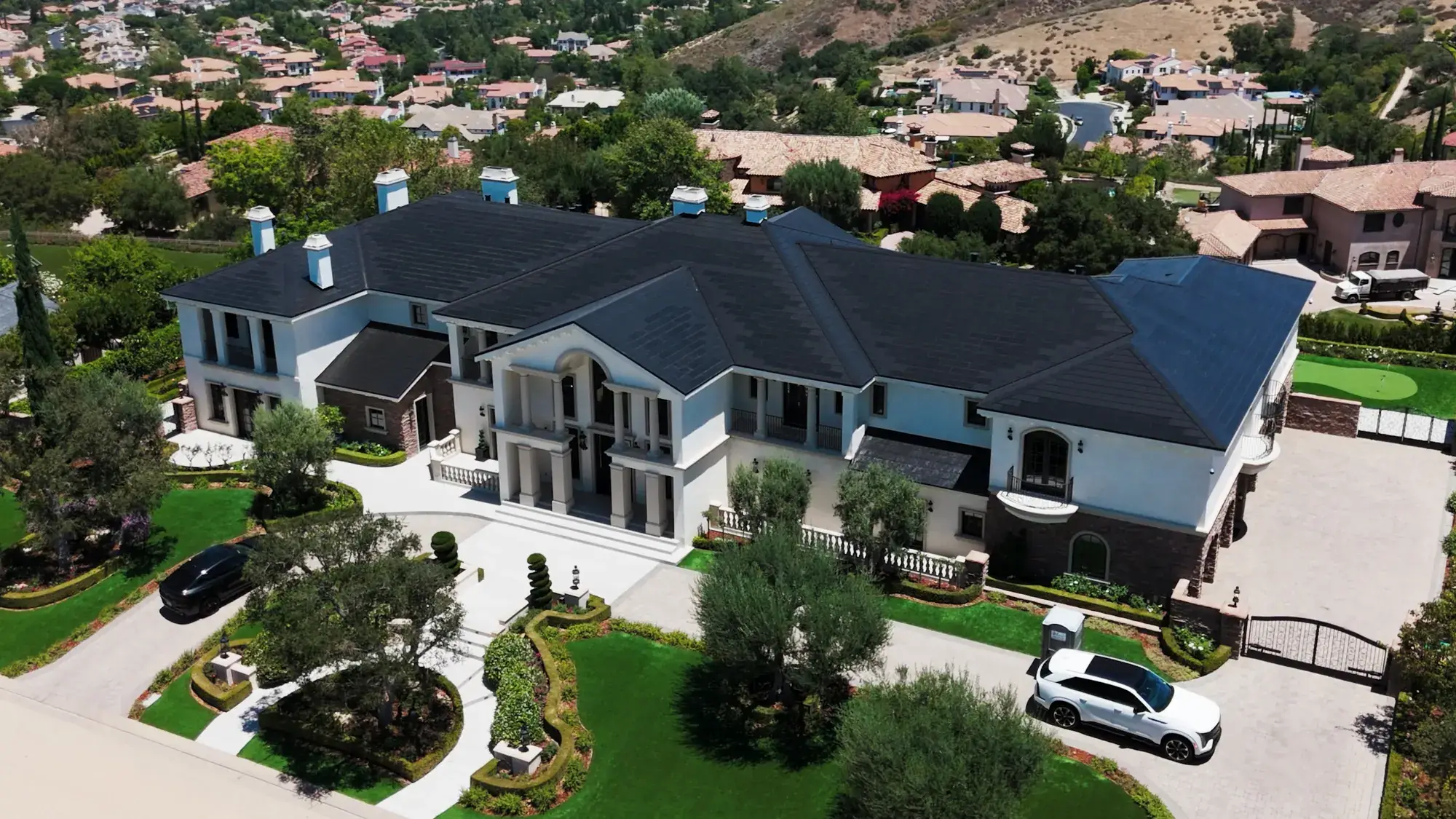
Replace your roof with integrated solar tiles, Powerwall backup, and Tesla app monitoring. We plan the roofing and energy system together around your home, electricity use, and backup goals.
Roof and Solar in One
Powerwall Included
25-Year Coverage
Complete System Planning
Solar Roof is both a roofing project and a home energy system. We plan the roof, active tiles, inverter, Powerwall capacity, permits, and utility steps as one connected job.
We review roof condition, pitch, geometry, shade, and obstructions before recommending Solar Roof. If a conventional roof and rack-mounted panels make more sense, that comparison should be clear from the start.
Active-tile coverage, inverter equipment, and Powerwall capacity all affect how the system performs. We plan them around your electricity use, outage priorities, and expected future needs.
Solar Roof involves roofing, electrical work, permits, inspection, and utility approval. One coordinated plan keeps those steps connected from the first assessment through system activation.
Solar Roof repairs and later roof changes require specialized coordination. We explain those service limits, warranty considerations, and future expansion constraints before the project moves forward.
Solar Roof makes the most sense when you already need a new roof and value an integrated appearance. We review roof pitch, structure, geometry, shade, obstructions, electricity use, and backup goals before recommending a system.
We review the roof deck, pitch, geometry, shade, electricity use, and the loads you want Powerwall to support.
We plan active and inactive tile coverage, system size, inverter equipment, and the number of Powerwalls around your home.
We prepare the project plans and coordinate required roofing, electrical, permit, and utility documentation.
The existing roof is normally removed to the deck before the approved underlayment, flashings, and roofing system are installed.
Trained installers place the active and inactive tiles, connect the electrical strings, and install the inverter and Powerwall equipment.
After required inspections and utility permission to operate, we activate the system and walk you through Tesla app monitoring.
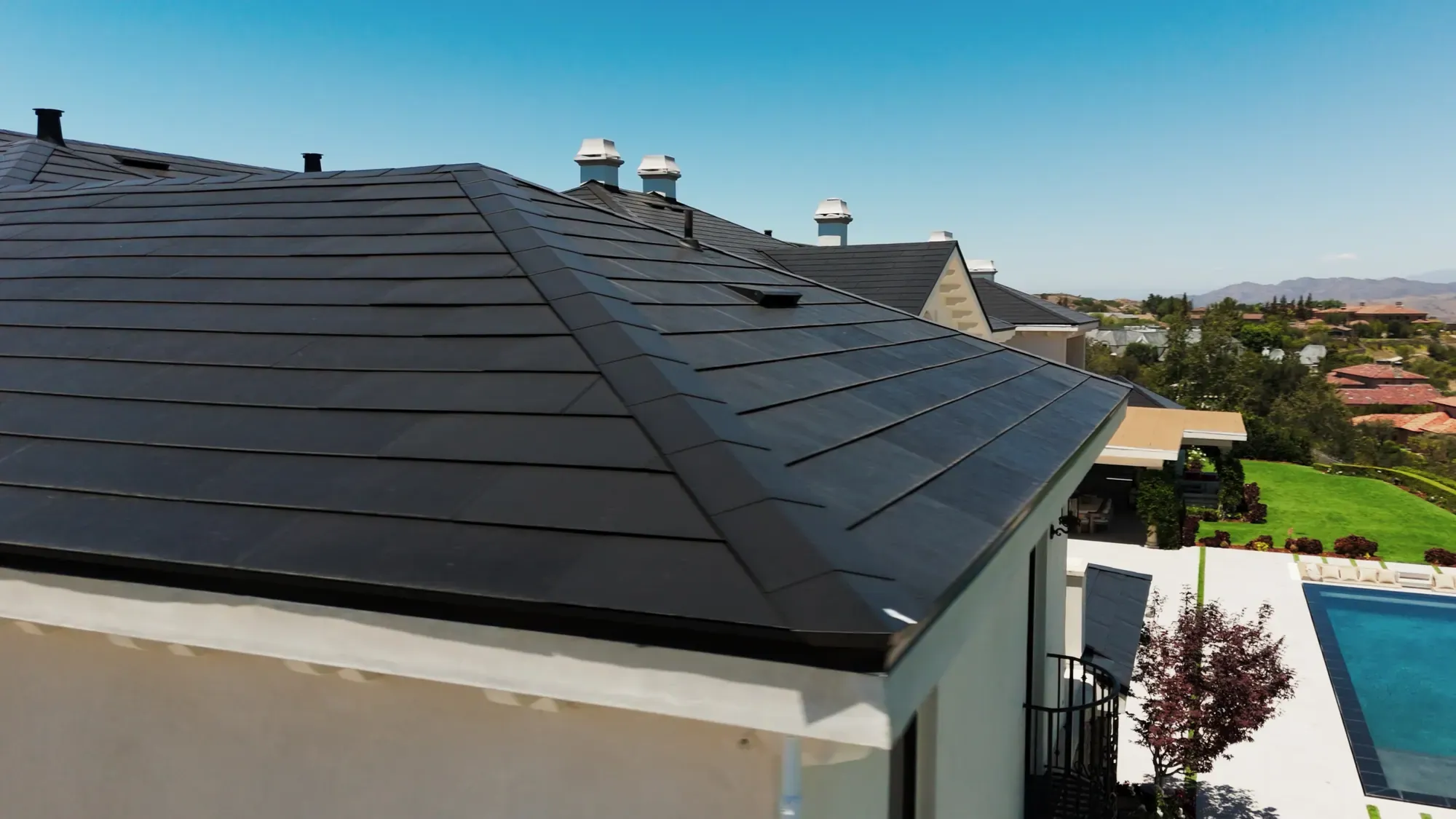
Solar Roof combines weather protection, electricity generation, energy storage, backup operation, and monitoring. We plan the pieces together so the active-tile layout and Powerwall capacity match how your home uses energy.
Active and inactive tiles create one finished roof instead of placing panels above existing roofing.
Converts electricity from the active tiles into AC power your home can use.
Stores energy for nighttime use and properly configured outage backup.
Follow solar production, home consumption, battery status, and grid energy in one app.
Real Results From Real Homes
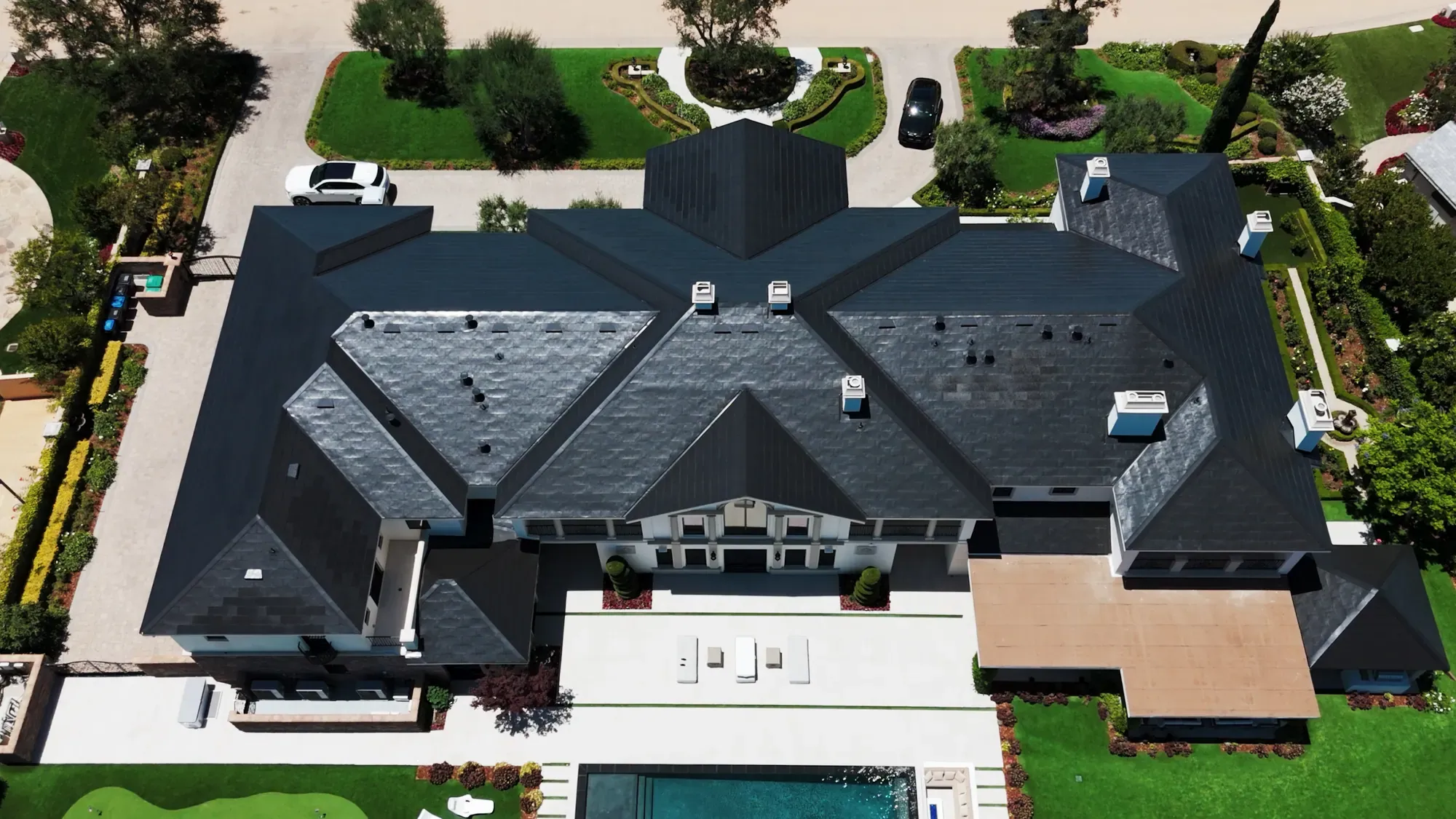
A Tesla Solar Roof on a hillside Calabasas estate, with Tesla batteries keeping the power on hand.
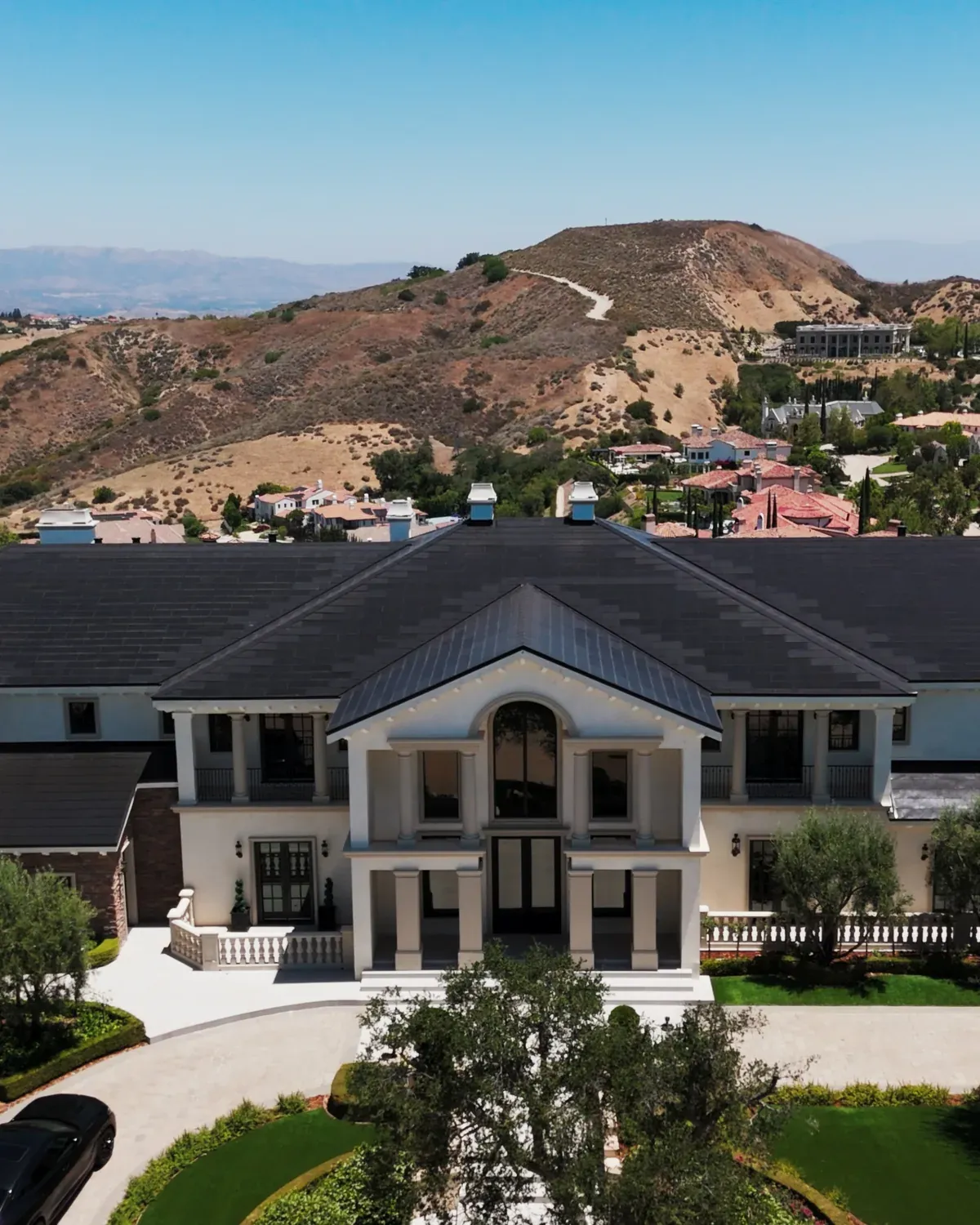 Calabasas Project
60 kW Tesla Solar Roof Estate in Calabasas
A 60 kW Tesla Solar Roof produces more than 80,000 kWh a year, and five Tesla batteries store that power for the evening and for outages.
Solar Roof Costs
Solar Roof replaces the existing roofing material, so compare it with the cost and scope of a new conventional roof plus solar.
Review my roofTotal roof area, geometry, active-tile quantity, Powerwall capacity, electrical work, and construction needs all affect the final scope.
Assess my homeReview Solar Roof with Powerwall beside a new roof, rack-mounted solar panels, and battery storage. That is the useful side-by-side comparison.
Compare options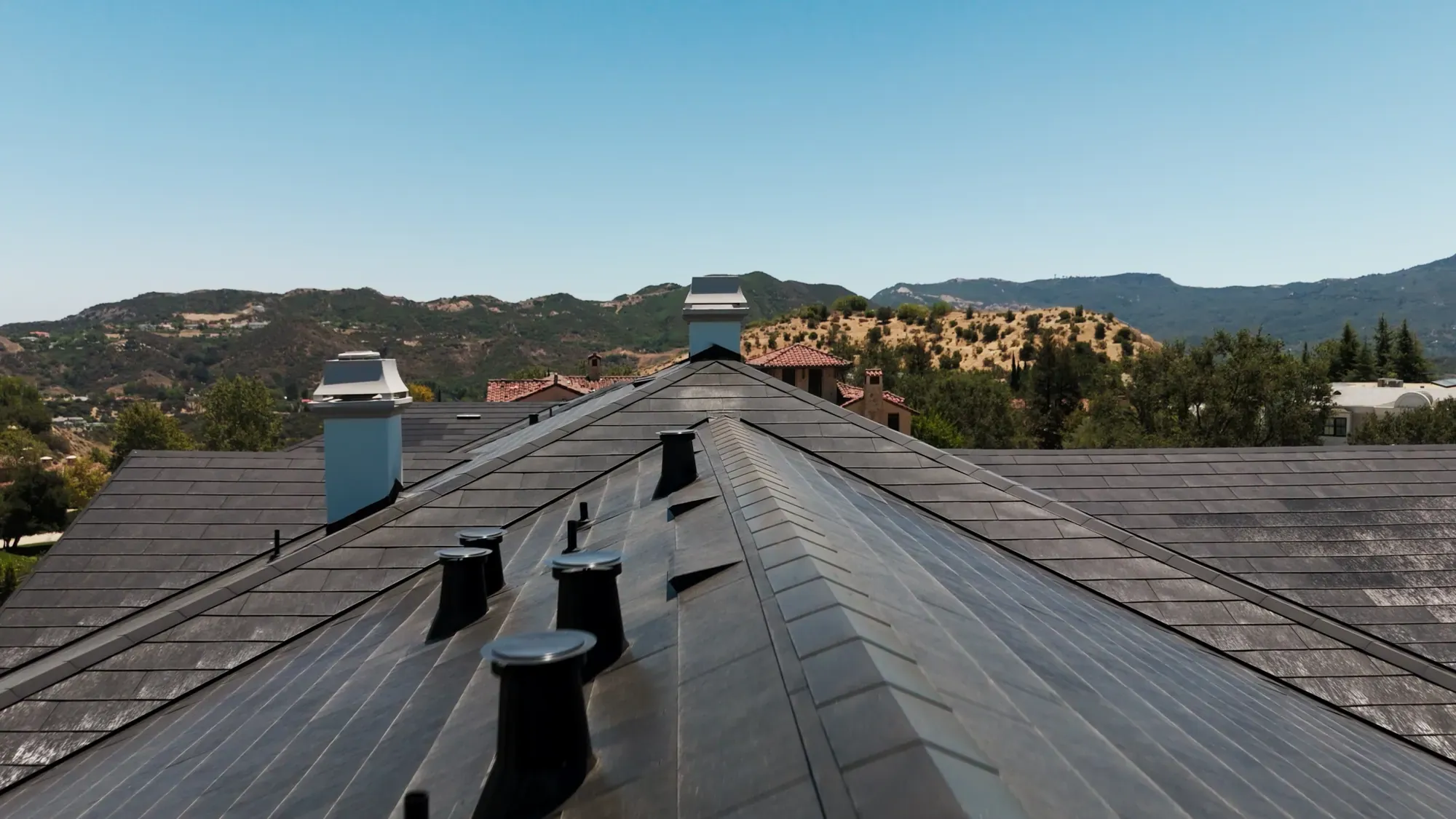
Tesla Solar Roof FAQ
Solar Roof is both a roofing system and a solar energy system. These answers cover the roof, active tiles, Powerwall backup, installation, service, and cost considerations.
Tesla Solar Roof is a complete roofing system made from active photovoltaic tiles and visually matching inactive tiles. It replaces the existing roof while generating electricity. The system also includes weatherproofing, rapid-shutdown equipment, a Tesla Solar Inverter, Powerwall storage, and Tesla app monitoring. It is different from conventional solar panels, which mount above an existing roof.
No. Tesla uses active and inactive tiles across the same roof. Active photovoltaic tiles generate electricity and go on roof areas with useful solar exposure. Inactive glass or metal tiles cover edges, cuts, shaded areas, obstructions, and surfaces where production is unnecessary. Tesla designs the two tile types to look substantially alike when viewed from normal ground level.
Yes. Tesla currently sells Solar Roof together with Powerwall. Powerwall stores solar energy and enables properly configured backup operation when the utility grid is down. The number of Powerwalls depends on the loads you want to support, how long you want backup to last, the size of the Solar Roof system, and whether you prefer whole-home or partial-home backup.
Yes, when the system includes compatible backup equipment and is properly configured. Powerwall can supply supported home loads while Solar Roof produces energy in daylight and recharges the battery. Available power is still limited by solar conditions, battery capacity, inverter output, and household demand. Large loads may need to be managed during a long outage.
No. Tesla lists a minimum roof pitch of 2:12 for the tile system. Structure, roof geometry, deck condition, shade, climate requirements, local codes, and installer availability also affect eligibility. Dormers, valleys, skylights, chimneys, and multiple roof angles may be workable, but they can increase inactive-tile coverage, construction complexity, installation time, and cost.
Tesla's construction specification lists the solar tiles as UL 2218 Class 4 for impact (hail) resistance and ASTM D3161 Class F for wind resistance. Those ratings describe tested configurations. The performance that applies to your home depends on the approved roof assembly, site conditions, structural requirements, and local building code.
Tesla provides 25-year product, weatherization, and module-performance warranties for its current U.S. Solar Roof system. The performance warranty covers at least 95 percent of rated power capacity after five years, followed by no more than 0.5 percent annual decline for the next 20 years. Warranty terms do not guarantee a specific electric bill reduction or annual production.
The on-roof installation usually takes from several days to a couple of weeks, depending on roof size and complexity. The full project takes longer because detailed design, engineering, permits, inspection, and utility permission to operate happen around the installation work. Complicated rooflines, structural repairs, and electrical requirements can add time to the schedule.
Contact Us
Tell us about your roof, electricity use, and backup priorities. We can help you compare Solar Roof with a conventional new roof, solar panels, and battery storage.
Tell us your roof age, home address, electricity use, and backup goals. We can help you understand whether an integrated Solar Roof and Powerwall system fits your home.